I turned 35 just about a month ago. About two years ago, around the same time as my birthday, my grandmother died. I was living in Los Angeles back then and for some reason I couldn’t go home to the Philippines. It was one of the biggest regrets I had in the last two years. I remember posting this on Instagram in honor of my grandmother:
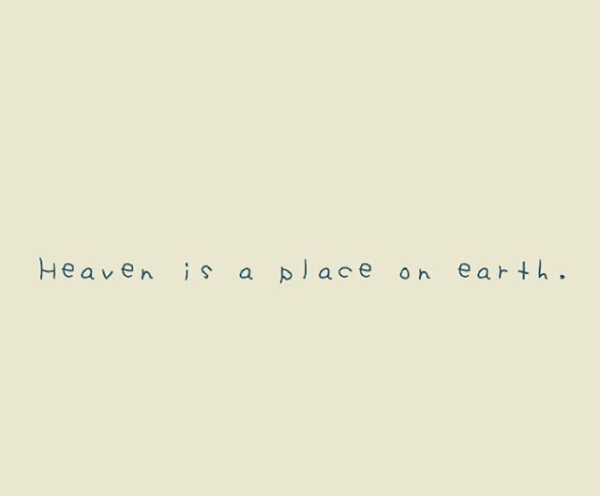
The post was inspired by an episode of Black Mirror which featured the song of the same name by Belinda Carlisle. I had watched the episode to distract myself around the same time as my grandmother’s final days before she died. I was deeply moved when I watched the ending (oops…spoiler alert) wherein the two female protagonists sailed off to San Junipero (also an actual place near Carmel by the Sea in San Francisco named after a Spanish missionary) a mythical place or rather, literally a “cloud” in the context of digital computing. A place where people extend a virtual version of their lives — which is pretty close to the concept of heaven in true fashion of a Black Mirror imagination of our future. I was thinking and wishing my grandmother was in a similar concept of heaven.
As I celebrated my birthday last month (alone and lost in a beach somewhere), I was reminded that in a few years, I’ll turn 40, and of the regrets of missing my grandmother’s last few days. In the last 3 months, I’ve been working at one point for 17 hrs. a day on average and had never fully enjoyed a Holiday or a weekend. I barely saw my sister who came to visit from the US and was home for two weeks. I missed celebrating three of my siblings’ birthdays and even my own birthday celebration with my family. I also missed seeing my new born niece until about two weeks after her birth even if we practically live in the same compound in the same village.
Life is short and sometimes unpredictable. What if we keep missing on life and tomorrow someone close to you or you yourself will be gone? Despite all the stories of how a “brilliant jerk” Steve Jobs was, he is truly “brilliant” and I will always go back to his famous speech whenever I feel l need guidance, especially when it came to the “pursuit of happiness” and goals. I kept “hearing” in my head this part of his famous commencement speech at Stanford:
No one wants to die. Even people who want to go to heaven don’t want to die to get there. And yet death is the destination we all share. No one has ever escaped it. And that is as it should be, because Death is very likely the single best invention of Life. It is Life’s change agent. It clears out the old to make way for the new. Right now the new is you, but someday not too long from now, you will gradually become the old and be cleared away. Sorry to be so dramatic, but it is quite true.
Your time is limited, so don’t waste it living someone else’s life. Don’t be trapped by dogma — which is living with the results of other people’s thinking. Don’t let the noise of others’ opinions drown out your own inner voice. And most important, have the courage to follow your heart and intuition. They somehow already know what you truly want to become. Everything else is secondary.
Though it might sound cliche and how much referenced these thoughts are to the imagined and unreal, sometimes a brief distraction is what actually brings us back to reality. If only we could upload and extend a virtual version of our lives in a “cloud”, but in reality, we can’t. Our time is too limited.
I don’t want to go to heaven yet, but I’d like to experience heaven now, in most days. Heaven can be a place on earth, only if we have the courage to find what it means to us and if we choose to pursue it.
 earth to ren
You must be logged in to post a comment.